909-223-6814

Bad Credit Truck Financing for Established & New Trucking Businesses
You can finance a commercial truck with bad credit. Most lender programs work down to about a 550 FICO, and some go lower when the rest of the file is strong.
What changes at a low score isn’t whether you get funded. It’s what you pay to get funded, a larger down payment and a higher rate on the same truck.
This page gives you both numbers. Lewis Capital has provided commercial equipment financing for over 25 years. We’re not a bank; we work on your file across multiple lender programs. At a 570 score, that’s the whole difference, one bank saying no ends the conversation, and we have somewhere else to take it.
Can You Get Truck Financing With Bad Credit?
Yes. Most commercial truck lenders consider applications down to roughly 550, and specialized programs go into the 500s with a large down payment, verifiable revenue, or industry experience. Below 500, options narrow but don’t disappear.
A lender taking on a lower-scoring borrower reduces risk somewhere else, and there are only three places to do it: bigger down payment, higher rate, shorter term. Usually all three.
That’s the honest trade. If you’ve been quoted zero down and single-digit rates on a bruised file, ask what they aren’t telling you about the fees.
What Lenders Actually Mean by "Bad Credit"
There’s no single cutoff. The same score can be approved at one shop and declined at another, depending on the rest of the file. Commercial truck lenders generally sort applicants into five bands.
The score is a starting point, not a verdict
An underwriter reading a 610 file wants to know why it’s a 610. High card balances read very differently from a repossessed truck. Lenders care most about how you’ve handled large installment debt, auto loans, mortgages, and prior equipment notes, because that’s closest to what you’re asking for.
Semi trucks are the tightest category right now
Class 8 costs more, carries more operating risk, and took the hardest hit in the used market. In 2026, most semi-borrowers see 20% down and mid-to-high teen rates regardless of credit.
Credit tier |
Down payment |
Rate range |
What the file needs |
|---|---|---|---|
680+ (prime)
|
10-20%
|
Single digits to low teens
|
Score does the work
|
640–679 (near prime)
|
15-20%
|
Low to mid teens
|
Clean recent payment history
|
600–639
|
20-25%
|
Mid to high teens
|
Time in business or CDL tenure
|
550–599 (subprime)
|
25-35%
|
High teens to mid 20s
|
Strong deposits plus one offsetting factor
|
Below 550
|
35-50%
|
Mid 20s and up
|
Specialized programs; multiple offsetting factors
|
680 file |
580 file | |
|---|---|---|
Down payment
|
20% - $20,000
|
30% - $30,000
|
Amount financed
|
$80,000
|
$70,000
|
Rate
|
~9%
|
~20%
|
Monthly payment
|
~$1,660
|
~$1,855
|
Total interest
|
~$19,700
|
~$41,200
|
Total cost
|
~$119,700
|
~$141,200
|
What Bad Credit Actually Costs You
The same truck, financed two ways – $100,000 used sleeper, 60-month term:
The 580 borrower put down $10,000 more, financed $10,000 less, and still pays about $195 more a month and $21,500 more overall.
Worth knowing before you sign. It’s also why the refinance section below matters, on a five-year note, twelve months of clean payment history can be worth more than anything else you do this year.
About zero-down offers
True zero-down structures exist, but they’re for strong-credit borrowers with steady income and solid financials. If credit is why you’re on this page, plan on bringing cash to closing. Anyone advertising no-money-down bad credit truck loans is either burying the down payment in the financed amount or charging for it somewhere you haven’t looked.
The Factors That Outweigh a Low Score
We place files across multiple lender programs, so we see the same borrower declined by one underwriter and approved by another. The difference is almost never the score, it’s what else is in the file.
You don’t need all seven. You need enough stacked on the other side of the scale that the score stops being the headline.
Factor |
Why it moves the decision |
|---|---|
Factor
|
Why it moves the decision
|
CDL and industry tenure
|
570 with eight years of clean CDL history is a different risk than 570 with none. Five-plus years carries real weight, including years driving for someone else.
|
Time in business / DOT authority age
|
New authorities get scrutinized hard. Past two years with an active MC and clean safety record, doors reopen.
|
Down payment size
|
The fastest lever you control. 20% to 30% can be the whole difference, and it lowers your rate too.
|
Bank balance and deposits
| |
Homeownership
|
Read as skin in the game. Not required, but it helps a thin file.
|
Truck age and mileage
|
The truck is the collateral. Most lenders want under 10 years and under 700,000 miles. Weak credit plus an old rig stacks two risks.
|
Committed freight
|
A signed contract or dedicated lane turns your application from a projection into a plan. Worth more than a 20-point score bump.
|
Bad Credit Truck Financing by Equipment Type
What you’re buying changes what your credit needs to look like.

Semi Trucks (Class 8)
The hardest category. Most lenders want mid-600s for standard programs, so bad credit semi truck financing generally means 25% down or more at high-teen to mid-20s rates.
- newer used unit with service history, verified CDL experience, committed freight.
- private-party purchase of a high-mileage truck with no inspection.

Box Trucks
The easiest approval in the bad credit category. Box trucks hold value and sell fast across delivery, moving, contracting, and retail supply, which limits the lender’s downside. If you’re financing a box truck with bad credit, expect a lower down payment than a semi at the same score.

Dump Trucks
Moderate risk and a common bad credit request, lenders are used to independent operators building business credit alongside the business. Specialty programs often start around 580. Use case matters: a truck tied to an active hauling or construction contract underwrites far more easily than one bought on spec.

Tow Trucks
Similar to dump trucks, with one advantage, a police rotation or contracted recovery agreement is documented, recurring revenue attached directly to the unit being financed.

Flatbed Trucks
Finance a new or used flatbed truck with flexible financing options built around your business, equipment, and cash flow. Get the truck you need to keep hauling and growing.
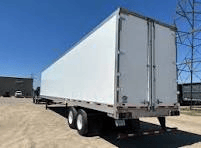
Commercial Trailer
Finance new or used commercial trailers with flexible options for owner-operators, fleets, and businesses. Get financing based on your equipment and business needs.
Owner-Operators vs. Established Fleets
First truck or owner-operator
The lender is evaluating you personally: FICO, CDL history, driving record, and cash down. There may not be a business credit file yet; that’s normal. Time in the industry and a realistic hauling plan substitute for it.
Expect to put down more than an established carrier at the same score. That’s not a penalty; it’s the lender pricing the absence of a track record.
Established carrier
The conversation shifts to the business, bank statements, revenue trend, debt service coverage, existing notes, and safety scores. Personal credit still matters, but it stops being the whole story. A carrier with a 590 score and two years of strong deposits has options a first-time buyer doesn’t. Fleets can also sometimes use equity in paid-down trucks to strengthen a new deal.
Bankruptcy, Repossession, Liens, and Thin Files
We place files across multiple lender programs, so we see the same borrower declined by one underwriter and approved by another. The difference is almost never the score, it’s what else is in the file.
You don’t need all seven. You need enough stacked on the other side of the scale that the score stops being the headline.
Situation |
Financeable |
What it takes |
|---|---|---|
Discharged Chapter 7
|
Yes
|
Discharge documented plus seasoning, commonly 12 months. What you've done since matters more than the filing itself.
|
Chapter 13 in repayment
|
Harder
|
Trustee approval for new debt, documented. Plan on a larger down payment.
|
Prior truck repossession
|
Toughest
|
Same collateral type, so lenders want distance and an explanation. A 2023–24 downturn repo with documented recovery reads differently than one six months old. 30%+ down.
|
Open tax liens
|
Case by case
|
Liens can subordinate the lender's position. A current, documented IRS payment plan usually resolves it; an unaddressed lien usually doesn't.
|
Collections / charge-offs
|
Usually yes
|
It depends on what they are. Medical collections carry far less weight than a charged-off auto loan or defaulted equipment note.
|
No credit history
|
Often easier
|
A thin file isn't a bad file. A strong down payment, CDL experience, and clean statements can carry it. Plan on 25–30% down.
|
Documents That Strengthen a Bad Credit Application
- Completed credit application
- Driver's license and CDL
- Sales order or dealer invoice
- Unit specs, year, make, model, VIN, mileage
What a low-score file needs on top
- Six months of bank statements instead of three, more months is more evidence
- Proof of committed freight — signed contract, broker letter, dedicated lane, police rotation letter
- Documented down payment source — seasoned funds, not a wire from last week
- A written explanation for anything derogatory — one factual paragraph. Underwriters read these. An explained 2024 repossession is a story; an unexplained one is a red flag.
- Co-signer documentation, if available — a partner or spouse with strong credit changes the file materially
- Insurance binder ready, since lenders won't fund without coverage in place
- Co-signer documentation, if available — a partner or spouse with strong credit changes the file materially
- Proof of business formation — EIN, LLC filing, MC and DOT numbers
How Lewis Capital Works a Bad Credit File
We’re a commercial equipment finance company, not a bank. We don’t lend our own capital, we structure your file and place it with the lender programs most likely to approve it.
At prime credit, that distinction barely matters. At 570, it’s the whole game. A bank has one credit box; fall outside it, and there’s nowhere else to go in that building. We work on multiple programs with different appetites.
- Soft-pull pre-qualification — you find out where you stand before anything hits your report
- A phone call — most lending decisions today come from a scoring model that never asks a question. On a bad credit file, the conversation is where the compensating factors come out. None of that fits in a form field.
- File placement — we put the application in front of lenders whose programs fit your profile, rather than shotgunning it and generating declines
- Terms and funding — decisions typically come back in 24 to 48 hours. You review down payment, rate, term, and fees before signing.
We don’t get paid to tell you no. We also won’t tell you yes on terms that put you out of business in eight months.
Warning Signs in Bad Credit Truck Lending
Borrowers with damaged credit get targeted on the assumption that they’ll take the first yes they hear.
Guaranteed approval
Nobody can guarantee an approval before reviewing a file. It’s a lead-gen tactic, and the terms behind it are where the money is made.
No credit check
A legitimate commercial lender will look at your credit. Programs that skip it price that risk into rates and fees.
Upfront fees before an approval
Application fees are normal in some cases. Large advance fees or deposits demanded before a written offer are not.
A quote with no questions
If nobody asks about your DOT history, time in business, the truck, or your deposits, they’re not quoting your deal.
Terms that only appear at signing
You should see the down payment, rate, term, payment, and total cost before you commit. If your business is managed from California, state law requires specific cost-of-credit disclosures on commercial financing offers of $500,000 or less.
Need help? Want more info? Please
Improving Your File Before or After You Buy
Before you apply
Pull your credit report and dispute anything inaccurate, pay down revolving balances, avoid new personal credit applications for 90 days, and add to your down payment. Nothing improves your terms faster per dollar than cash at closing.
After you buy
Twelve months of on-time payments on a commercial equipment note is one of the strongest things you can add to a credit file. Once that history exists, refinancing at a better rate is often available, and on a five-year note, that recovers a meaningful share of what the bad-credit rate cost you.
We have simplified the truck financing process so you can move forward without delay.
Get Pre-Qualified for Bad Credit Truck Financing
A low score narrows your options. It doesn’t close them. It means the rest of your file has to do more work, that’s what we help you build.
Send your credit application, driver’s license, sales order, and unit specs, and we’ll tell you where you stand.
Initial review uses a soft credit check and does not impact your credit. A hard inquiry may be required by a lender if you choose to move forward. Lewis Capital arranges commercial equipment financing through third-party lender partners; final rates, terms, and approval decisions are set by the funding source.
Frequently Asked Questions
What credit score do I need for bad credit truck financing?
Most programs work down to around 550. Below that, expect specialized lenders, 35%+ down, and strong compensating factors like CDL tenure or verified deposits.
Can I get a semi truck loan with bad credit?
Yes, though semis are the tightest category right now. Expect 25%+ down and high-teen to mid-20s rates. A newer unit, documented CDL experience, and committed freight all help.
How much do I need to put down with bad credit?
Generally 25-35% at 550-599, and 35-50% below 550. Prime borrowers put down 10–20%. Zero-down structures go to strong-credit borrowers only.
Can I finance a truck after a bankruptcy?
Yes. A discharged Chapter 7 is financeable with the discharge documented plus rebuilt payment history, commonly 12 months. Chapter 13 in repayment typically requires trustee approval.
Can I get approved after a truck repossession?
It’s the hardest item to overcome, but not disqualifying. Distance from the event and documented recovery both matter. Plan on 30%+ down and be ready to explain it.
Does applying hurt my credit score?
Our initial review uses a soft credit check, which doesn’t affect your score. A hard inquiry may be required if you move forward with a lender.
Do you check business credit or personal credit?
Both, where both exist. Established carriers are evaluated heavily on business performance; first-time owner-operators are evaluated on personal credit, CDL history, and down payment.
Can I finance a truck from a private seller with bad credit?
Possible but harder, no dealer warranty or inspection standard means more lender risk. Expect a higher down payment and a third-party inspection.
How fast can I get funded?
Decisions typically come back within 24 to 48 hours of a complete file. Funding follows once documents are signed and insurance is in place.