
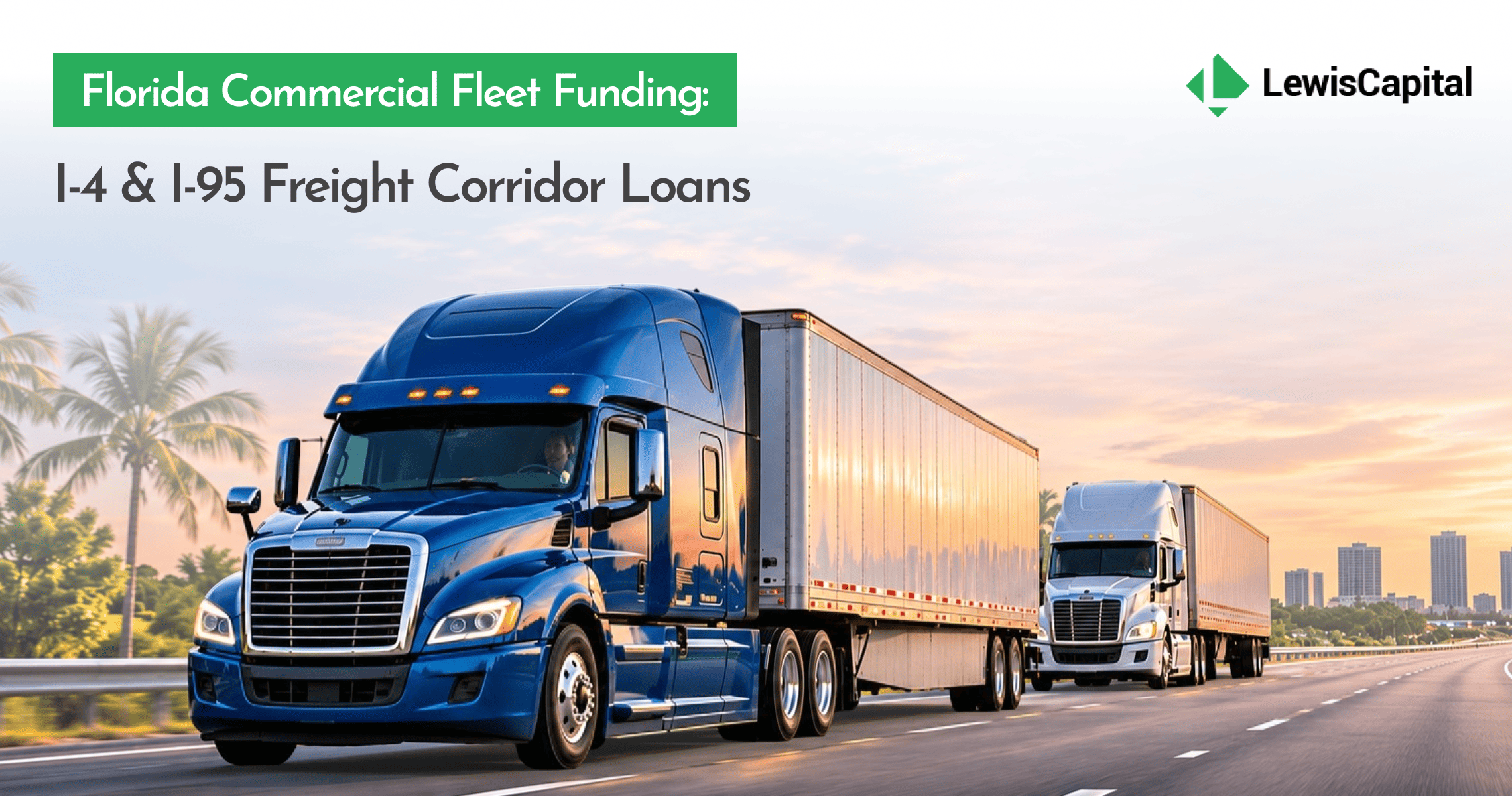
Florida Commercial Fleet Funding: I-4 & I-95 Freight Corridor Loans
Florida’s trucking industry moves everything from retail goods and building materials to agricultural products and containerized freight. For trucking companies operating between Tampa, Orlando, Jacksonville, and Miami, having reliable equipment is essential to keeping deliveries on schedule and meeting customer demand.
Two major routes support much of this activity: Interstate 4 (I-4), which connects Central Florida’s commercial markets, and Interstate 95 (I-95), which runs along the state’s Atlantic coast.
For fleet owners, these routes represent more than transportation connections. They shape where equipment is needed, what types of trucks businesses operate, and how much capacity they need to serve their customers.
The challenge is finding the capital to purchase additional trucks or replace aging equipment without putting unnecessary pressure on day-to-day cash flow.
Florida commercial fleet funding can help eligible trucking businesses finance the vehicles they need while spreading equipment costs over an agreed repayment period. Whether you’re adding trucks for an existing freight contract or replacing vehicles that are becoming expensive to maintain, the financing decision should start with your actual operating requirements.
Here’s what Florida fleet operators should consider before financing their next equipment purchase.
Why Florida's Freight Corridors Matter for Fleet Owners
Florida’s transportation network connects major population centers, distribution facilities, seaports, and commercial markets. Trucking plays a central role in moving goods between these locations.
The Florida Department of Transportation reported in December 2025 that approximately 75% of the state’s freight moves by truck. That makes commercial vehicles an important part of Florida’s supply chain.
However, freight activity varies by region. A company transporting goods between Tampa and Orlando may have different equipment requirements from a carrier handling container-related transportation near Jacksonville or South Florida.
Understanding these differences helps businesses make more informed equipment purchasing decisions.
I-4: Connecting Tampa, Orlando, and Central Florid
Interstate 4 connects Tampa and Orlando with Daytona Beach, passing through important commercial areas in Hillsborough, Polk, Osceola, Orange, and Volusia counties.
For trucking businesses, the corridor supports connections to:
- Warehouses and distribution centers around Orlando and Lakeland.
- Retail and wholesale distribution networks.
- Construction and industrial supply operations.
- Freight activity connected to the Port of Tampa.
- Regional transportation between Central Florida’s commercial markets.
Equipment requirements depend on the type of freight being transported.
A carrier handling general merchandise may need a dependable tractor and dry van trailer. A business transporting temperature-sensitive products may require refrigerated equipment. Construction-related operations may need flatbed trucks or specialized trailers.
The I-4 corridor also has practical operating challenges. Truck parking availability and congestion can affect driver schedules, equipment utilization, and delivery planning.
In June 2026, FDOT and federal transportation officials broke ground on truck parking expansion projects along I-4 as part of an initiative to add 917 parking spaces across the corridor.
For fleet operators, this highlights an important point: purchasing additional trucks is only one part of expansion. Businesses must also account for the infrastructure, drivers, routes, and operating resources needed to keep those vehicles productive.
I-95: Supporting Freight Movement Along Florida's Atlantic Coast
Interstate 95 connects several major Florida markets, including Jacksonville, Daytona Beach, Palm Beach, Fort Lauderdale, and Miami.
Its connections to major transportation facilities make it important for trucking companies involved in regional distribution, container transportation, and commercial freight.
For example:
- Jacksonville: JAXPORT supports container, vehicle, and other cargo operations.
- Fort Lauderdale: Port Everglades handles containerized cargo and other commercial shipments.
- Miami: PortMiami connects South Florida with international shipping and regional distribution networks.
These markets create different equipment requirements for trucking businesses.
A carrier handling container transportation may need compatible tractors and chassis arrangements. A company serving regional warehouses may require dry vans, while businesses transporting temperature-sensitive goods may need refrigerated trailers.
Before purchasing additional equipment, operators should identify the specific work the vehicle will perform and confirm that the equipment meets their customer’s requirements.
Freight activity at a port does not automatically guarantee loads or contracts for an individual carrier. Actual demand, customer relationships, operating costs, and competition still determine whether an additional vehicle makes financial sense.
When Should a Florida Trucking Company Consider Fleet Financing?
Fleet expansion should be connected to a clear business requirement, not simply the availability of a financing option.
Here are some situations where financing may be worth exploring.
Adding Trucks to Support Existing Contracts
If customers are requesting more capacity than your current fleet can handle, another truck may help you take on additional work.
Before purchasing, review the contract duration, expected monthly revenue, driver availability, and equipment utilization.
The important question is whether the additional work can support the full cost of operating and financing another vehicle.
Replacing Trucks That Are Becoming Expensive to Maintain
Older commercial trucks can create unexpected repair expenses and operational downtime.
If a vehicle is regularly out of service, the business may lose revenue while continuing to carry insurance, maintenance, and other fixed costs.
Financing a replacement truck may help spread the purchase cost over time. However, compare the expected maintenance costs of the existing vehicle with the full ownership and financing costs of a replacement.
Expanding Into Different Freight Operations
A trucking company serving general freight may decide to pursue refrigerated transportation, flatbed hauling, or container-related work.
That expansion may require a different type of truck or trailer.
For example, refrigerated transportation requires equipment with an appropriate cooling unit and maintenance history. Flatbed operations require a trailer configuration suited to the materials being transported.
Choosing the right equipment for the intended work is just as important as arranging the financing.
Preserving Working Capital During Expansion
Purchasing several trucks outright can tie up a substantial amount of business capital.
Trucking companies still need available cash for fuel, insurance, driver payroll, repairs, tires, and other operating expenses.
Equipment financing may help distribute the acquisition cost, leaving more cash available for daily operations. The business must still account for the down payment, interest, fees, and monthly repayment obligations.
What Equipment Can Florida Businesses Finance?
The type of equipment required depends on the freight being transported and the routes a business serves.
Lewis Capital provides nationwide commercial equipment financing options for qualifying businesses purchasing different types of commercial vehicles.
Common equipment requirements include:
Semi-trucks and heavy-duty tractors: Used for regional and long-haul freight transportation. Businesses can explore semi-truck financing for new and used equipment.
Dry van trailers: Commonly used for general freight, retail distribution, and warehouse transportation.
Refrigerated trailers: Designed for temperature-sensitive shipments. Buyers should consider refrigeration unit condition, service records, and ongoing maintenance costs.
Flatbed trucks and trailers: Used to transport construction materials, industrial equipment, and other freight requiring open-deck transportation.
Box trucks: Often suitable for regional deliveries, commercial distribution, and local transportation operations.
Businesses purchasing trailers separately can also explore commercial trailer financing.
The availability of financing depends on the equipment, transaction details, applicant’s financial profile, and applicable lender requirements.
What Do Lenders Consider When Reviewing a Fleet Financing Request?
A fleet financing application involves more than the number of trucks a company wants to purchase.
Financing providers generally evaluate the applicant’s ability to support the proposed payments and the equipment being financed.
Several factors may influence the review.
Business Revenue and Existing Obligations
Lenders may review business bank statements, financial records, existing equipment payments, and other debt obligations.
A company with consistent revenue and manageable expenses may be in a stronger position to demonstrate repayment capacity.
For multi-truck purchases, the total proposed monthly payments matter. A business should not evaluate each vehicle separately without considering the combined financial commitment.
Credit Profile and Time in Business
Personal and business credit history may influence financing eligibility and available terms.
Time in business also provides useful context. An established trucking company may have financial records and operating history that help demonstrate business stability.
Newer businesses and applicants with challenged credit may still have options, but financing requirements and terms can differ.
Truck Age, Mileage, and Condition
The equipment itself plays an important role in the financing decision.
Lenders may consider the vehicle’s model year, mileage, purchase price, condition, and market value.
This is particularly important when purchasing used commercial trucks. A lower purchase price does not always mean a more affordable financing arrangement because older, higher-mileage vehicles may have shorter available repayment terms.
For a closer look at this issue, read our guide to financing used trucks with high mileage and understanding loan term limits.
Cash Flow and Fleet Expansion Plans
Lenders may also examine whether the business has sufficient cash flow to support additional equipment payments.
A company planning to add four trucks should be prepared to explain how those vehicles will be used, whether drivers are available, and how the additional operating costs will be managed.
For a more detailed explanation of multi-unit underwriting, see our guide to fleet expansion loans and DSCR requirements.
There is no single credit score, down payment, or operating history that guarantees approval across all financing programs.
How to Prepare Before Applying for Fleet Financing
Having your equipment and business information ready can make the financing discussion more productive.
Before submitting an application, prepare:
- Business information: Legal business name, ownership details, and operating history.
- Equipment details: Year, make, model, mileage, purchase price, and specifications for each truck or trailer.
- Purchase documentation: Dealer invoice, sales order, or purchase agreement, when available.
- Financial information: Recent business bank statements and other financial records requested by the financing provider.
- Existing equipment obligations: Details of current truck loans, trailer payments, and outstanding balances.
It is also worth preparing a simple expansion budget.
For example, if your company plans to add three semi-trucks for regional freight operations, calculate the expected financing payments alongside driver wages, fuel, insurance, maintenance, and other operating expenses.
Then compare those costs with the actual freight contracts or customer demand supporting the purchase.
A realistic budget gives you a clearer picture of how much equipment your business can comfortably support.
Explore Florida Commercial Fleet Financing With Lewis Capital
Purchasing additional commercial trucks is a significant business decision. The right financing arrangement should reflect the equipment you need, your current financial position, and how you plan to use the vehicles.
Lewis Capital works with a network of lending partners to provide nationwide commercial equipment financing solutions for owner-operators, trucking companies, and growing fleets.
With more than 25 years of commercial financing experience, our team helps businesses explore available financing options based on their equipment requirements and credit profiles.
Whether your company operates between Tampa and Orlando, handles freight along I-95, or serves customers across multiple Florida markets, Lewis Capital can help you explore financing for qualifying commercial trucks and trailers.
Our commercial truck financing solutions include options for new and used commercial vehicles, owner-operators, and growing fleets.
Planning to add trucks to your Florida fleet?
Start with a pre-qualification review to discuss your equipment requirements and available financing options.
Frequently Asked Questions
Can Florida trucking companies finance multiple commercial trucks?
Eligible businesses may explore financing for multiple commercial trucks as part of a fleet expansion or replacement plan. Approval depends on the applicant’s financial position, credit profile, equipment details, and lender requirements.
Can I get fleet financing for trucks operating along I-4 and I-95?
Yes. Lewis Capital provides nationwide commercial equipment financing, including Florida. Businesses operating along I-4, I-95, and other freight routes can explore available financing options for qualifying trucks and trailers.
Can I finance used semi-trucks for my Florida trucking business?
Used semi-truck financing may be available depending on the truck’s age, mileage, condition, purchase price, and the applicant’s financial profile. Financing terms can vary between newer and higher-mileage vehicles.
What documents should I prepare for a fleet financing application?
Commonly requested information includes a completed credit application, identification, equipment specifications, a sales order or purchase agreement, and business financial records. Additional documentation may be required depending on the transaction and lender.
Does Lewis Capital offer financing for businesses with challenged credit?
Lewis Capital works with lending partners serving different credit profiles. Applicants with challenged credit may still have financing options, although eligibility, down payment requirements, and available terms depend on the complete application.
How long does a commercial fleet financing decision take?
Lewis Capital reports that many complete applications receive a credit decision within 24–48 hours. Actual timing depends on the application, equipment details, lender review, and any additional documentation required. A credit decision is not the same as completed funding.
Does pre-qualification affect my credit score?
Lewis Capital’s initial pre-qualification review uses a soft credit check, which does not impact your credit score. A lender may require a hard credit inquiry if you decide to proceed with a financing option.